The Earth Arc
A scavenger saves a hungry child. A bar becomes a sanctuary. The Charachari Mudra is taught for the first time in centuries.
The name Koi Iro (暗い色) translates from Japanese as “dark colour.” It is a contradiction that turned out to be a description.
In Vedic philosophy, darkness is not the absence of light. It is the soil from which light grows. The foundation that holds the building. The night that precedes every dawn. The age that ends so a new age may begin.
This is the worldview at the centre of Koi Iro — a story in which a half-Indian, half-Japanese girl with both colours braided into her eyes must descend through every realm of Vedic cosmology to prove a single thesis: origin does not determine nature. A demon-king becomes the most generous being in creation. A celestial lord becomes the most corrupt. A Naga deserter becomes the bravest commander. A barkeeper holds the cosmos together with stubbornness and love.
Earth, after the Third World War, lies in ruins. Four clans survive in the wreckage — unaware that their reality is one of fourteen interconnected cosmic realms.
Across the Eastern continent stretch the bones of the world that was. Coastal megacities have collapsed into salt and rust. Forests have reclaimed concrete. The skies remember fire. And humanity, having forgotten the Lokas of Vedic cosmology that once gave structure to existence, holds the anchor of all fourteen realms without knowing it carries the load.
When the anchor begins to crack, only three beings — a scavenger, a barkeeper, and a child — can read the signs in time. And to mend it, they must remember what the world forgot.
The universe was never out there. It was always inside you.
In Vedic cosmology, the 14 Lokas are not distant mythological places. In Koi Iro, they map directly onto the human chakra system. Seven realms ascend from the crown to the hips. Seven realms descend from the hips to the soles. The Charachari Mudra — “Wake and Walk” — allows trained beings to travel between realms by resonating with each Loka's frequency from within their own body.
Power in Koi Iro requires the simultaneous control of five emotions — held as a single chord. Not suppressed. Not denied. Harmonised.
Three beings who carry the weight of fourteen realms — a girl named for a contradiction, a foundling who builds worlds, and a child who draws them.
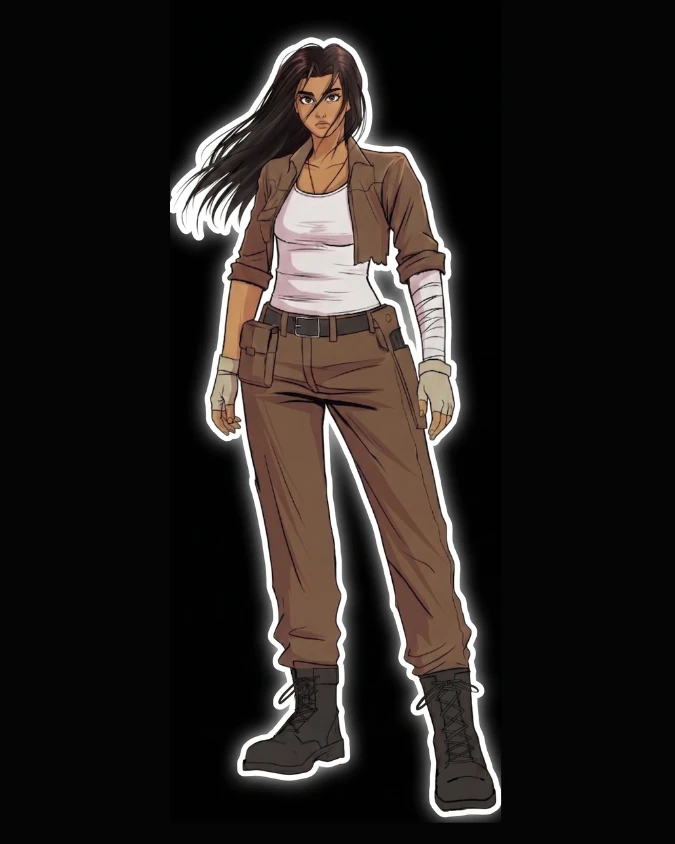
Half-Indian, half-Japanese. Born of Bhuvar Loka with Patala Loka maternal lineage. The bridge between dark and light. Her name means “dark colour” — a contradiction that turned out to be a description.
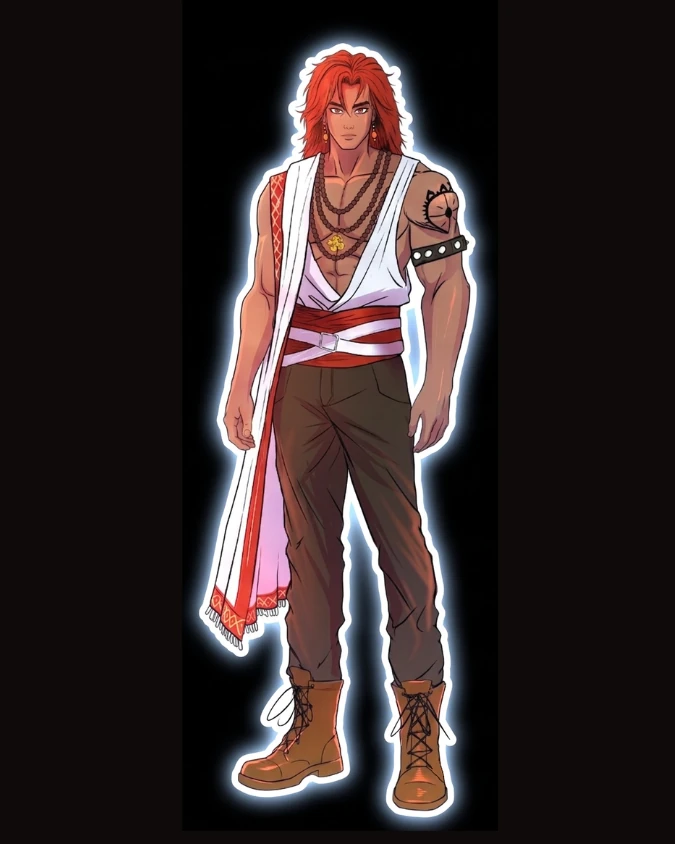
A foundling from Talatala Loka raised on Earth. Architect of realities. The barkeeper who built a community from rubble and discovered, decades later, that he was building the cosmic anchor.
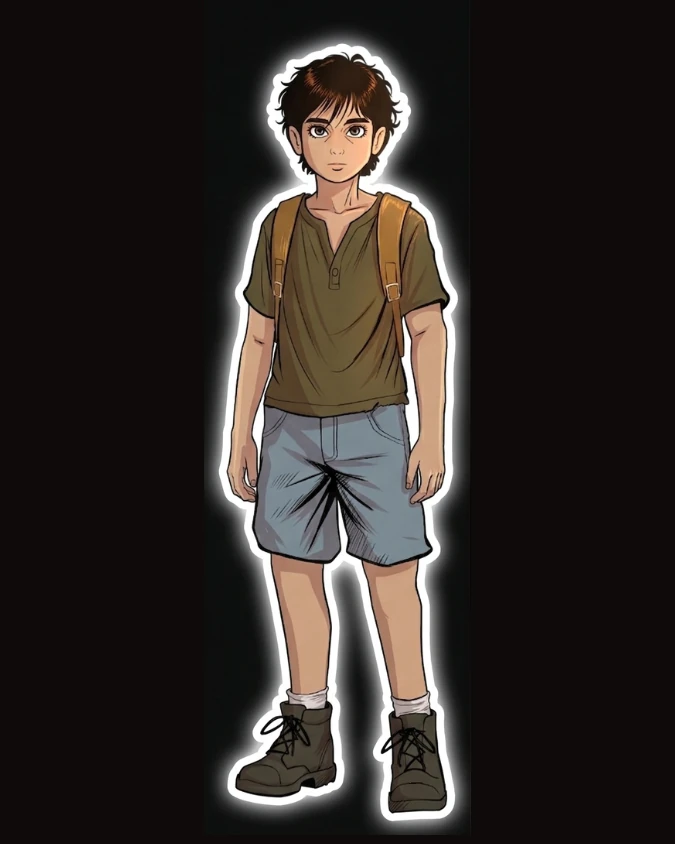
A child connected to Jana Loka, carrying Srishti Shakti — the power of creation. The boy who draws worlds and accidentally makes them real.
Those who gathered around a bonfire in a broken city and decided to hold the cosmos together.
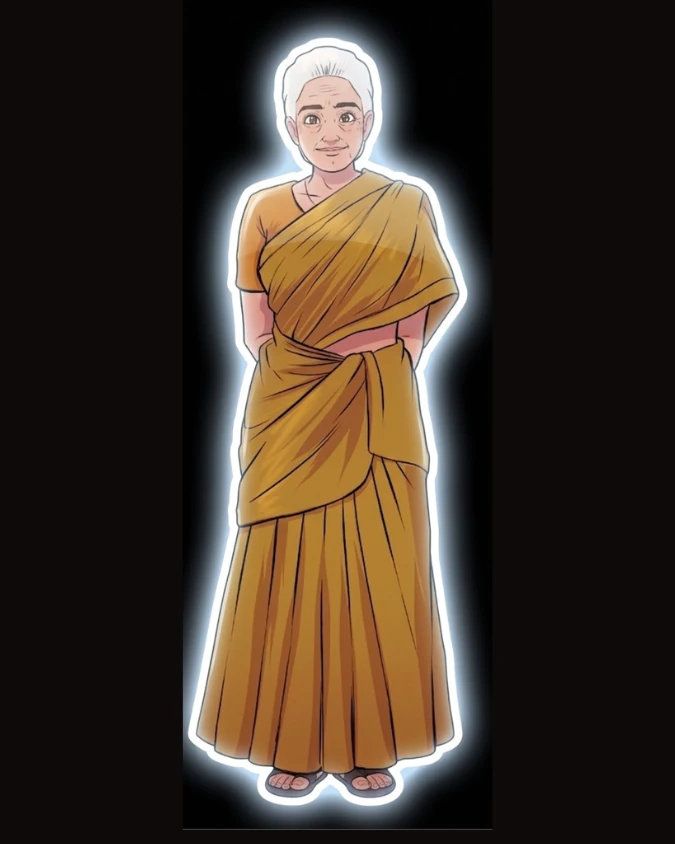
The old woman by the bonfire who told stories since before time kept track. A consciousness loved across every lifetime. Her prayers held the anchor when nothing else could.
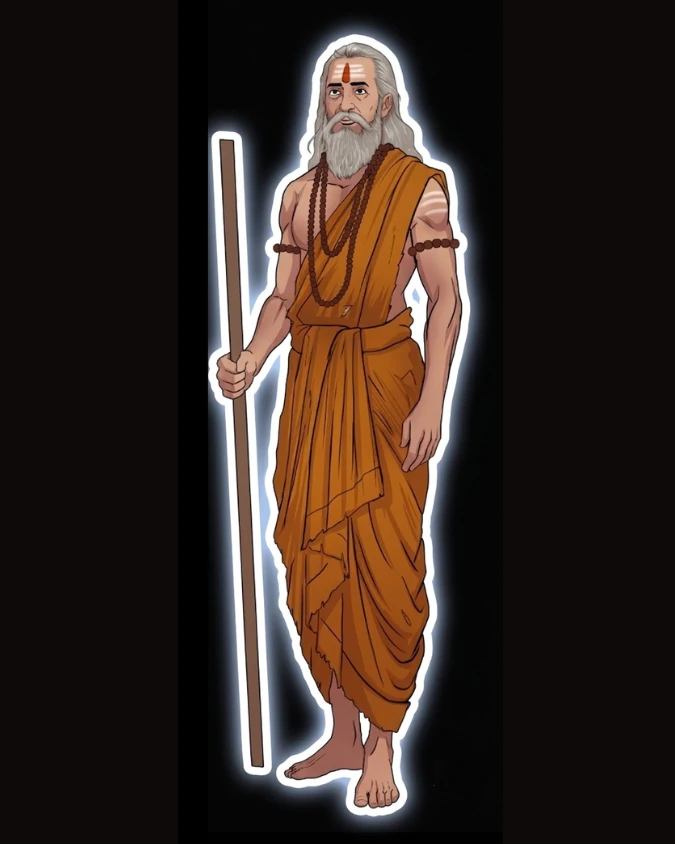
The wandering teacher who arrived at a bar one evening and taught the Charachari Mudra. His consciousness now lives in the crowns of those he touched.
The patchwork-coated ruler of the realm of generosity. A king who perches on the armrest of his own throne. Proves that giving is structurally superior to taking.
A young Naga from Mahatala who fled his realm and found a community that saw the serpent and stayed. Becomes Border Commander; later, the bridge between species.
A Shadowken refugee whose clinic door is always open. The centre that held when everything else moved. Rishi's quiet love story.
A trader who was not a trader — a Vitala noble in disguise. Material transmutation through gold rings. The alliance's logistical foundation.
They are not evil. They are beings with genuine grievances who chose the wrong methods. The conspiracy of the new order.
The Mahar Lok consciousness who weaponised the highest discipline of his realm. Violated minds in service of his fear of chaos. The corruption of certainty itself.
The lord of Svarga who watched humanity destroy itself for two thousand years — and concluded the cosmic anchor could not be trusted to mortals. Corrupted paradise to preserve it.
A Danava commander whose daughter once asked: “Why do they call us dark?” Her grievance is real. Her methods are not. The most sympathetic of the antagonists.
Seven volumes — deliberately mirroring the seven upper and seven lower Lokas. The turning of an age, told as a journey through every realm of creation.
A scavenger saves a hungry child. A bar becomes a sanctuary. The Charachari Mudra is taught for the first time in centuries.
The party travels through the lower Lokas. Sutala. Talatala. Mahatala. Each realm reveals itself; each prejudice dissolves.
Iro descends to Patala alone — to the floor of creation, where her mother's footprints still glow. She returns whole.
The first cosmic council in millennia. The four human clans converge. The war is declared.
Three fronts. Every power awakened. Iro's body becomes the fault line through which the age itself begins to turn.
The new age does not reverse the hierarchy — it dissolves it. The fourteen realms become organs of a single body. Every realm essential. None superior.
Complete. Copyright-filed. Production-ready.
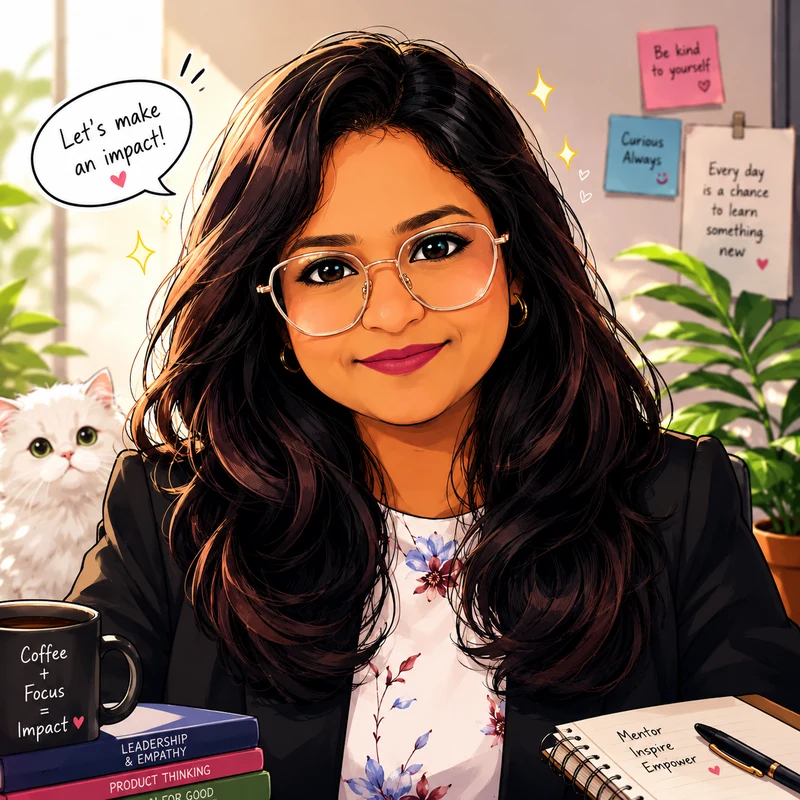
Reema Majumdar is a tech professional based in Noida, India. Koi Iro has been a thirteen-year creative journey — beginning in 2013 with the first hand-drawn manga pages, and culminating in eight years of screenplay writing.
The series was conceived from a deep belief that the next generation deserves access to thousands of years of Vedic philosophical wisdom — and that the manga medium is uniquely positioned to carry that wisdom to a global audience without losing its depth.
The story was conceived in 2013 with a thirteen-page hand-drawn manga prototype. After years of quiet development, the full screenplay began taking shape in 2018. The complete 85-chapter screenplay was finished in April 2026. All copyrights have been filed with the Government of India Copyright Office.
The art is yet to be drawn. The story is ready. If you are an artist, a publisher, or a believer in Indian mythology meeting the manga medium — the door is open.